When a scale-up is hiring full-stack developers, the pressure is rarely just about filling a vacancy. Every open role affects release speed, roadmap confidence, and the amount of pressure falling on the existing team. That is why missing a strong candidate can be far more expensive than it looks at first.
In 2026, many scale-ups are not missing great full-stack developers because the talent does not exist. They are missing them because their hiring process is too slow, too narrow, or too difficult to navigate. By the time a strong candidate has gone through multiple rounds, unclear feedback loops, and delayed decisions, the opportunity is already gone. Let’s break down why scale-ups miss great full-stack developers and how to avoid turning hiring delays into growth bottlenecks.
Why Scale-Ups Miss Great Full-Stack Developers
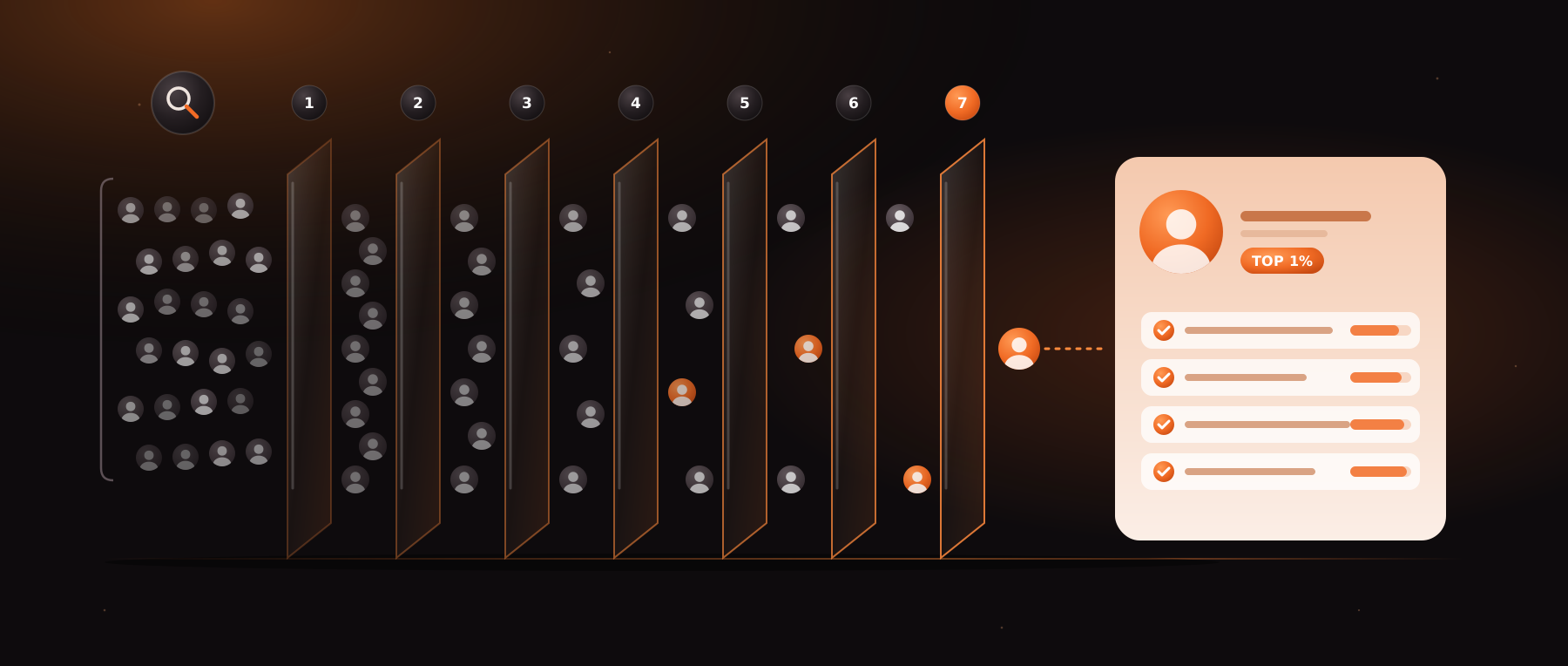
Scale-ups miss great full-stack developers when the hiring process moves slower than candidate momentum. Long interview cycles, unclear role expectations, inconsistent evaluation, and overloaded internal teams all make it easier for strong candidates to drop out or accept another offer.
Why Great Full-Stack Developers Matter for Scale-Ups
Great full-stack developers are valuable because they can work across frontend, backend, APIs, product delivery, and technical problem solving. For scale-ups, that range matters because the roadmap is moving quickly and teams need engineers who can adapt across changing priorities.
Strong full-stack developers help businesses:
move faster without creating too many handoffs support both product delivery and technical quality contribute across multiple areas of the stack reduce pressure on overstretched internal teams
That is why losing the right candidate is not just a hiring issue. It is often a delivery issue too.
The Main Reasons Scale-Ups Miss Strong Candidates
When we look at stalled or unsuccessful hiring, the same issues appear again and again.
1. The hiring process takes too long Strong candidates rarely stay available for long. Long interview chains, slow scheduling, and delayed decisions often mean the best people accept another offer first.
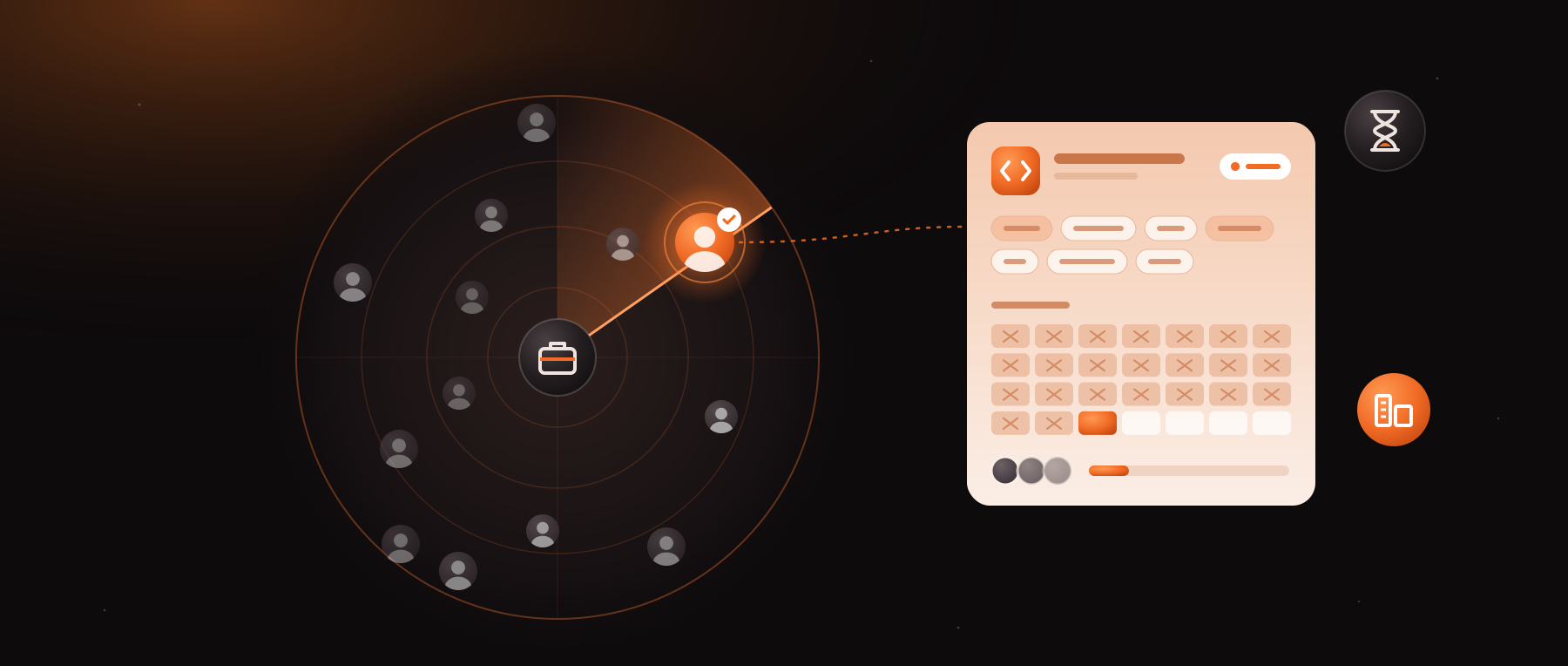
2. The role is defined too broadly or too vaguely Some companies ask for too much in one role, while others do not define the actual outcomes clearly enough. That makes it harder to attract the right people and assess them properly.
3. Evaluation is inconsistent If different interviewers are looking for different things, the business can miss strong developers simply because the assessment is not aligned.
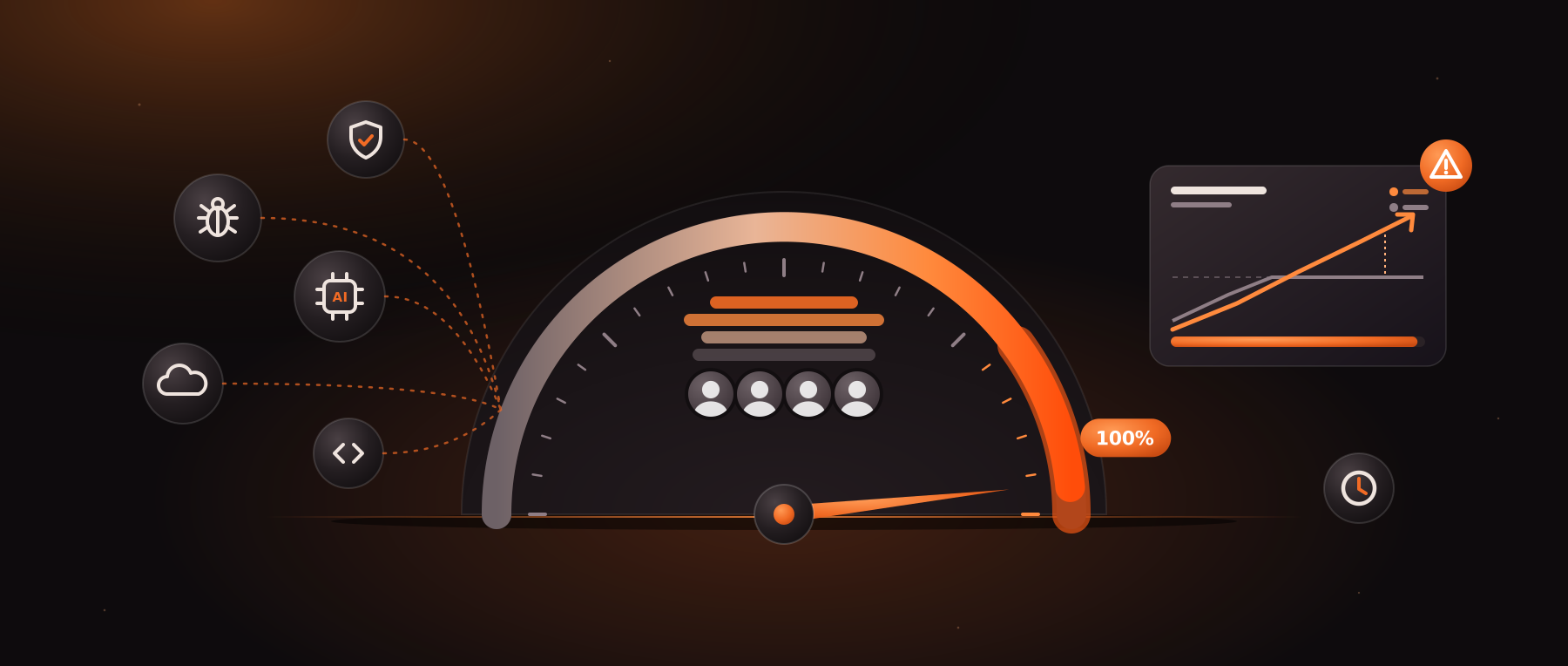
4. Senior teams are overloaded When the same leaders are responsible for delivery, reviews, and hiring, candidate momentum slows down and decisions take longer.
5. The business waits too long to act Some scale-ups know they need to hire but delay action until the pressure is already affecting the roadmap. At that point, the process becomes reactive instead of well controlled.
How to Spot Hiring Gaps Before They Hurt Delivery
Hiring problems usually show up before they become major delivery problems. The key is noticing the signals early.
Watch for signs like these:
strong candidates drop out before the final stage interview cycles keep expanding with no faster decisions internal teams are repeatedly stretched while roles stay open product timelines are shaped by staffing gaps leaders are spending too much time trying to keep the hiring process moving the team keeps meeting candidates but still struggles to close the right hire
These are all signs that the hiring issue is not only about sourcing. It is about process, speed, and evaluation quality.
Why do scale-ups miss great full-stack developers?
Scale-ups miss great full-stack developers when the hiring process is too slow, role expectations are unclear, interview assessment is inconsistent, or overloaded leaders cannot move candidates through the process quickly enough.
What is the biggest reason strong candidates are lost?
The biggest reason strong candidates are lost is usually hiring speed. Long interview cycles and delayed decisions make it easier for other companies to move faster and close the hire.
How can scale-ups stop missing strong engineering candidates?
Scale-ups can stop missing strong engineering candidates by tightening role definitions, aligning interview criteria, reducing process delays, and using faster hiring models when roadmap pressure is high.
Why do good candidates drop out of full-stack hiring processes?
Good candidates drop out when the process feels too long, expectations are unclear, feedback is slow, or another employer offers a faster and more decisive experience.
Challenges of Hiring Without the Right Process
Even when a business has strong intent and a clear hiring need, process gaps can still block results. We see the same challenges again and again.
Slow coordination: interview steps take too long to line up Weak assessment structure: teams are not aligned on what good looks like Decision lag: strong candidates lose momentum before an offer is made Delivery pressure: existing teams absorb the gap while the process drags on
This is where the right IT staff augmentation model can make a real difference.
How IT Staff Augmentation Helps You Avoid Missing Top Talent
When a business needs strong engineering capacity quickly, IT staff augmentation gives it a way to move faster without lowering the bar. Instead of relying only on slow traditional recruitment, the company can extend its team with Dedicated Developers who have already been vetted for technical skill, communication ability, and delivery fit.
That matters because scale-ups do not only need more applicants. They need the right people at the right time.
With the right approach, companies can:
access Top 1% Developers through a structured vetting process work with AI Vetted Talent supported by Technical Assessments and human review Hire Within A Week for many roles, depending on specialization benefit from Transparent Pricing and No Hidden Costs use an All-Inclusive Pricing Model that reduces hiring friction work with a Dedicated Customer Success Manager for Continuous Support scale through Fully Integrated Services rather than disconnected candidate sourcing alone
Why IT Staff Augmentation Wins
The best hiring process is not always the longest one. What matters is whether the business can identify strong developers quickly, evaluate them well, and bring them into the team before momentum is lost.
That is why IT staff augmentation works so well for growing software companies. It helps scale-ups reduce hiring delays, avoid losing strong candidates, and keep product delivery moving without sacrificing quality or control.
Conclusion
Scale-ups miss great full-stack developers for one simple reason: the hiring process often moves slower than the opportunity.
If you want to reduce hiring delays without compromising on quality, Smart Working can help you hire Dedicated Developers with Transparent Pricing, Time Zone Aligned Hiring, and Continuous Support. Reach out today to explore the right setup for your team.