Understand why in-house full-stack teams face scaling pressure as ownership, specialist work, maintenance, and coordination outgrow the original team structure
In-house full-stack teams can hit scaling limits when the responsibilities around the product grow faster than the team’s ability to organize and support them. Feature development, maintenance, technical decisions, reviews, incidents, and mentoring may continue to depend on the same engineers even as the business adds more products and customers.
This is not an inevitable ceiling on in-house development or a failure of full-stack engineers. It is a mismatch between the work the organization now needs and the operating structure built for an earlier stage.
The response may involve clearer ownership, shared knowledge, specialist support, better tooling, fewer concurrent priorities, or additional engineers. The right intervention depends on the cause—not simply whether the developers work internally or remotely
Why the original full-stack structure works well
A small full-stack team can keep product decisions close to implementation. Engineers understand how interface behavior, APIs, application logic, and data connect, and can follow a feature across those layers without handing every decision to another team.
That context is valuable as the product evolves. The limitation is not technical breadth itself. The difficulty appears when broad capability is treated as unlimited responsibility
An engineer who can work across the stack still has finite time and attention. Asking them to own more systems, review more changes, support more customers, and mentor more colleagues changes the role—even if the job title stays the same.
What changes as a software company grows?
Growth increases more than feature demand. Existing customers need support, integrations must remain compatible, releases require more assurance, and the consequences of failure can become more significant.
The organization may add engineers without redistributing decision authority or documenting the knowledge required to work independently. In that situation, implementation capacity grows while the same senior people remain responsible for almost every consequential decision.
In their 2022 article “Bottleneck #02: Talent,” Tim Cochran and Roni Smith describe scaling constraints involving key-person dependencies, recruiting capacity, and integration of new employees. It is a useful organizational framework, not a benchmark showing that every team has the same limits in 2026.
Six reasons in-house full-stack teams face scaling pressure
1. Product ownership becomes wider than one team can support
A team may start with one application and later support several modules, integrations, or customer segments. Work still enters the same backlog, but the engineers need more domain knowledge to assess its consequences.
The resulting strain can look like an implementation problem when it is actually an ownership problem. Engineers repeatedly need context from people outside the immediate workstream, and product priorities compete without a clear decision process.
Possible response: Define meaningful product or system boundaries. Clarify which team owns each area, who decides cross-cutting changes, and how dependencies are coordinated. Do not create additional teams solely to match an organizational chart if the work cannot be separated usefully.
2. Important knowledge remains concentrated in a few people
The engineers who built the early product often understand its hidden assumptions and failure modes. New colleagues may be capable but still need those engineers to explain changes, approve designs, or recover from incidents.
This creates a tension: experienced engineers are expected to deliver their own work while enabling everyone else. A new hire can initially increase that support load rather than reduce it.
Possible response: Make knowledge sharing part of delivery. Use pairing, documentation, shared review, and explicit handover. Give other engineers opportunities to own changes with support, rather than reserving every difficult decision for the original team
3. Specialist risks require deeper expertise
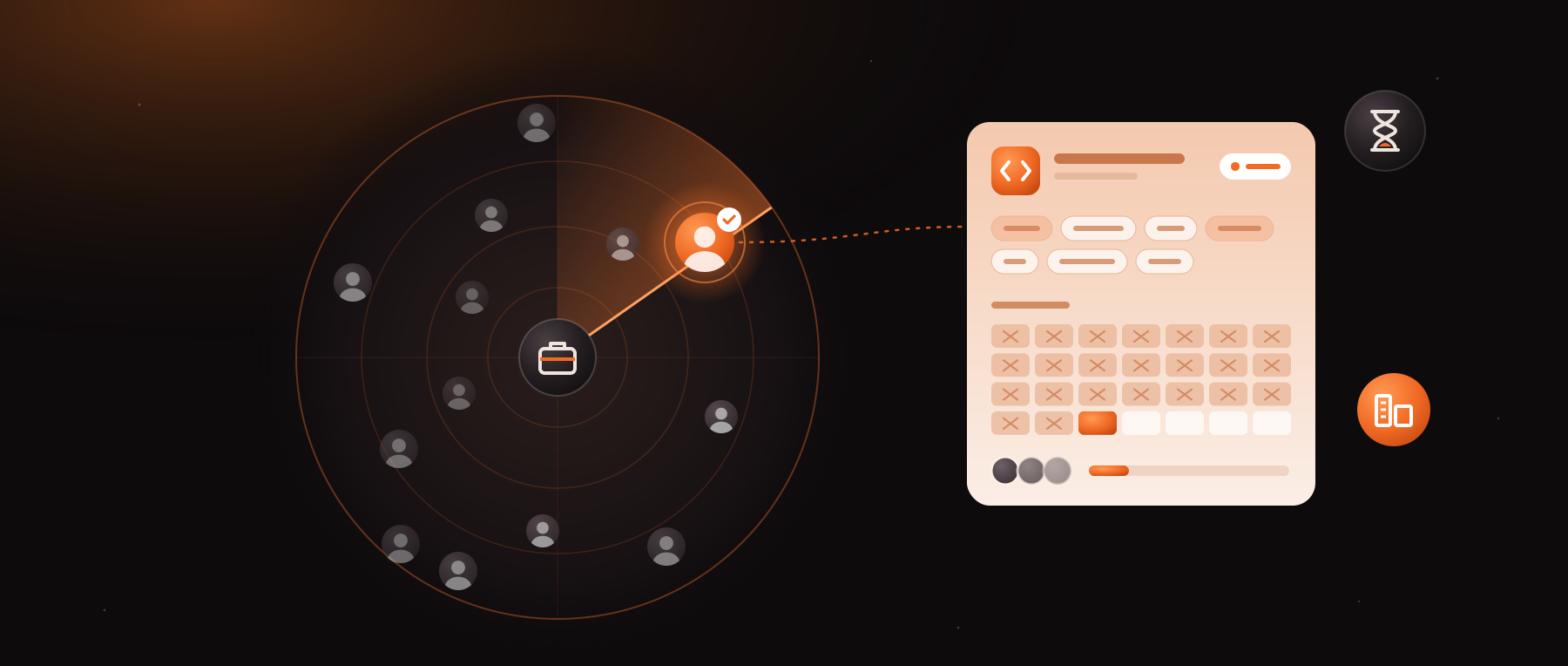
Full-stack engineers can connect application layers, but not every role requires the same depth in security, data engineering, infrastructure, accessibility, or performance
As the product takes on different risks, the team may need expertise that was not essential in its first version. That does not mean every generalist should become a specialist in every area.
Possible response: Define where specialist review or ongoing ownership is needed. A bounded assessment, an internal specialist, or an external expert may resolve a specific need. Preserve the distinction between expertise required occasionally and a capability the business must maintain continuously.
4. Maintenance competes with the roadmap
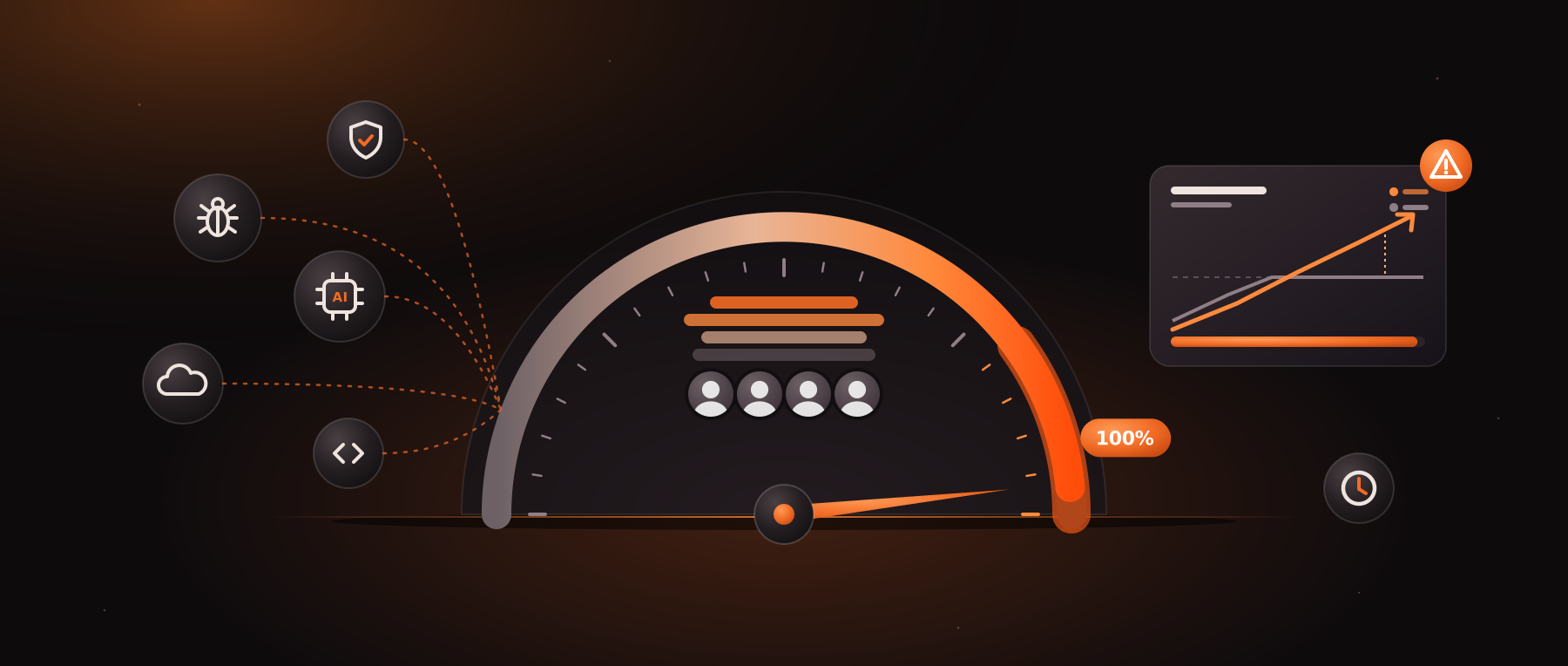
An established product needs upgrades, defect resolution, operational support, and changes to existing integrations. If planning counts only new features, those responsibilities consume capacity that was already promised elsewhere.
The team may appear to deliver less even while completing necessary work. Treating maintenance as an interruption rather than part of the product can also postpone improvements that would reduce repeated problems.
Possible response: Include maintenance and operational responsibilities in planning. Identify recurring causes and allocate capacity to address them. Product and engineering leaders should agree the tradeoffs rather than leaving individual engineers to absorb them informally.
5. Coordination and review do not scale with headcount
Adding developers creates more work to review, more questions to answer, and more interfaces to manage. If the organization keeps the same approval structure, additional implementation can accumulate behind unchanged decision capacity.
The problem is not that collaboration is undesirable. It is that necessary coordination has not been designed or resourced for the current amount of work.
Possible response: Clarify decision rights and review responsibilities. Reduce unnecessarily large changes, train additional reviewers, and give leads time for coordination. Avoid removing essential quality checks simply to make the process appear faster
6. Recruiting and onboarding are treated as work outside delivery
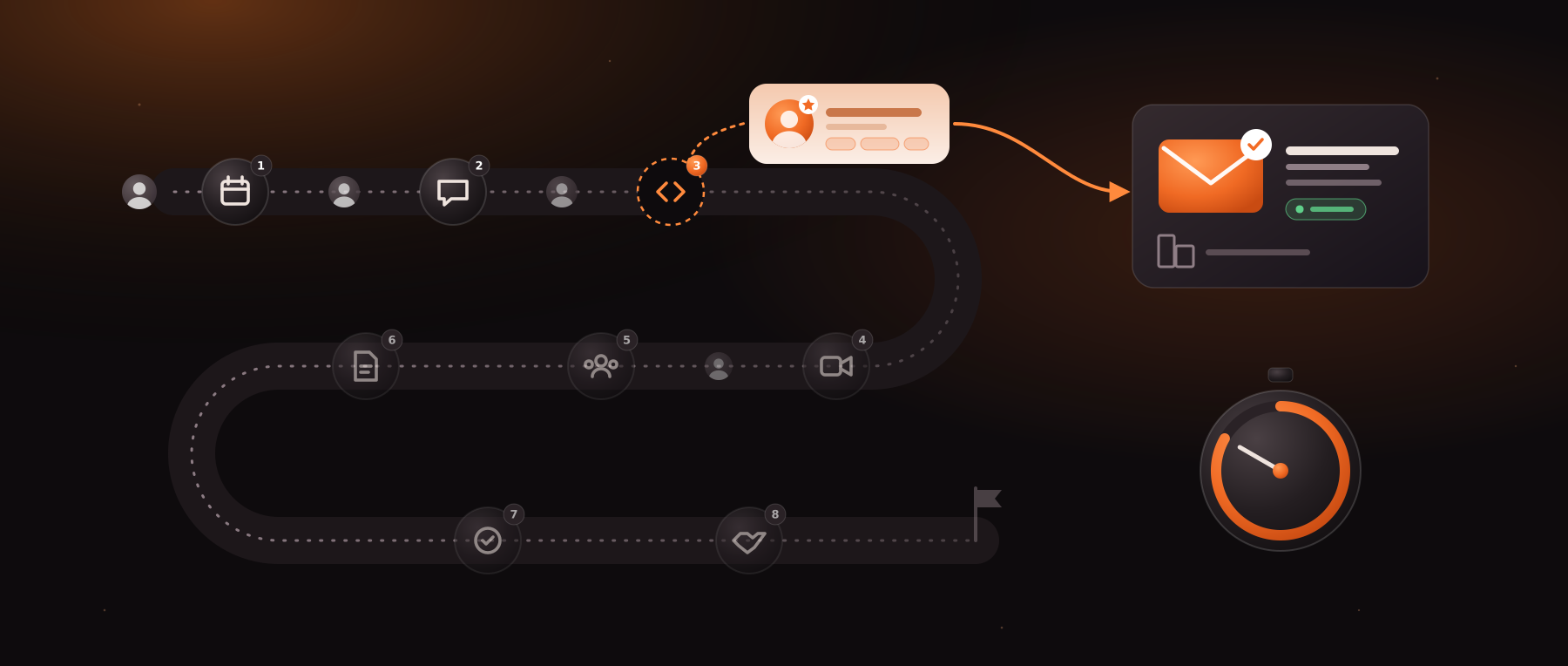
Interviewing, preparing documentation, setting up access, and supporting a new colleague require time from the existing team. If the roadmap assumes engineers remain fully available throughout expansion, the plan double-counts their capacity.
A start date does not establish when the new engineer can contribute independently. The answer depends on system complexity, available support, and the responsibilities they will own.
Possible response: Plan recruiting and onboarding as explicit work. Prepare a bounded first task, name an onboarding counterpart, and set realistic contribution expectations. Improve the conditions for productive work rather than attributing every difficult start to the new hire.
Full-stack breadth and specialist depth can coexist
The choice is not necessarily generalists versus specialists. A team can use engineers with broad application understanding alongside colleagues with deeper expertise in particular risks or systems.
Describe what each role must own independently, what it needs to understand, and where collaboration is expected. This is more useful than assuming “full-stack” means equal mastery across the entire technology environment.
For example, a product engineer might own a feature across its interface and API while a platform engineer supports deployment architecture. Clear interfaces allow both to contribute without making either responsible for every layer alone.
The balance should change with the actual work. There is no universal team size or specialist ratio that establishes the correct structure for every company.
A hypothetical scaling example
Consider a SaaS company whose original team builds features, reviews every change, and responds to production issues. The company adds engineers to accelerate a new product module, but architectural decisions and releases still depend on the original lead.
The new hires increase implementation capacity. They do not automatically create another reviewer, distribute operational knowledge, or resolve unclear module ownership.
A suitable response might combine defined module responsibility, pairing to build review capability, and protected lead time. If a remaining implementation gap is confirmed, additional engineers can then work within that structure.
This is an illustrative scenario, not a client case study or a prediction of hiring outcomes.
Why location alone does not solve the scaling problem
Both internal and remote engineers can work effectively within clear ownership, review, and communication arrangements. Both can struggle when those arrangements are missing.
Remote hiring may broaden access to relevant capability. It does not automatically resolve an overloaded decision-maker, conflicting priorities, or missing system documentation.
Similarly, keeping every engineer on the internal payroll does not guarantee that knowledge and authority will be distributed appropriately. Evaluate how the team operates rather than treating location or employment model as the cause of every delay.
When additional capacity is appropriate
Additional engineers are a reasonable option when there is sustained work they can own and enough leadership, review, and onboarding support to integrate them.
Specialist help may be a better response when one technical area blocks progress. Process or ownership changes may be the priority when work mostly waits for clarification or approval.
Use the diagnosis to define the role. “We need someone to own the integration workstream with support from the architecture lead” is a clearer brief than “we need more full-stack developers.”
For the implementation of added capacity, see how to scale beyond in-house fullstack teams. Keep the diagnosis, organizational explanation, and capacity-expansion plan as connected but distinct decisions.
How Smart Working can support an identified capability gap
Smart Working provides dedicated remote developers who work within client teams, with managed HR and payroll, a Dedicated Customer Success Manager, and continuous AI training
This can support a business whose internal leadership can direct delivery but needs additional engineering capability. Your team still needs to define priorities, provide product context, review work, and establish acceptance standards.
Before selecting developers, confirm the technology requirements, ownership boundaries, working hours, support scope, and current commercial terms. If the constraint is unresolved organizational responsibility, address that alongside any hiring decision.
To explore support for a defined engineering need, discuss your requirements with Smart Working.
Scaling the organization, not only the team count
An in-house full-stack team has not failed simply because its original structure no longer fits the product. Growth changes the mix of work and the responsibilities needed to sustain it.
Preserve the team’s product context and technical strengths while adapting ownership, knowledge sharing, specialist support, and planning. Add capacity where the evidence supports it—not as a substitute for resolving how the work will be led.