When a SaaS company starts growing quickly, the need for strong engineering talent becomes impossible to ignore. Product roadmaps expand, integrations become more complex, user expectations rise, and release pressure builds across the business. At the center of that pressure, full-stack developers often become one of the hardest roles to hire well.
That is the challenge many scale-ups are dealing with in 2026. The demand for full stack talent is high, but the hiring process is often slow, expensive, and unpredictable. Founders, CTOs, and engineering leaders know they need more capability, yet the path to hiring the right people can feel harder than the product challenges themselves. Let’s break down why SaaS scale-ups struggle to hire full-stack talent and what practical options help remove the bottleneck.
Why SaaS Scale-Ups Struggle to Hire Full-Stack Talent
SaaS scale-ups struggle to hire full-stack talent because demand is high, the role is broad, hiring cycles often move too slowly, and growing companies increasingly need engineers who can handle both product delivery and more complex technical work. The result is a hiring process that often lags behind roadmap pressure.
Why Full-Stack Talent Matters for SaaS Scale-Ups
Full-stack developers are valuable because they can contribute across frontend, backend, APIs, integrations, and wider product delivery. For scale-ups, that flexibility matters because growth rarely happens in one part of the stack at a time.
A strong full-stack developer can help teams:
move faster across product priorities reduce handoff delays between functions support both feature work and technical problem solving add flexibility when roadmaps change quickly
That is why the demand is so high. For growing SaaS businesses, full-stack talent often sits close to the center of delivery speed.
The Main Reasons SaaS Companies Struggle to Hire Full-Stack Developers
When we work with fast-growing software companies, the same hiring constraints tend to appear again and again.
1. Demand is higher than supply Strong full-stack developers are in demand across startups, scale-ups, enterprises, and consultancies. That makes competition intense, especially for candidates with product experience.
2. The role is broad by nature Many companies are not just hiring for frontend and backend coverage. They also want problem-solving ability, architectural judgement, communication skills, and fast adaptation to changing product needs.
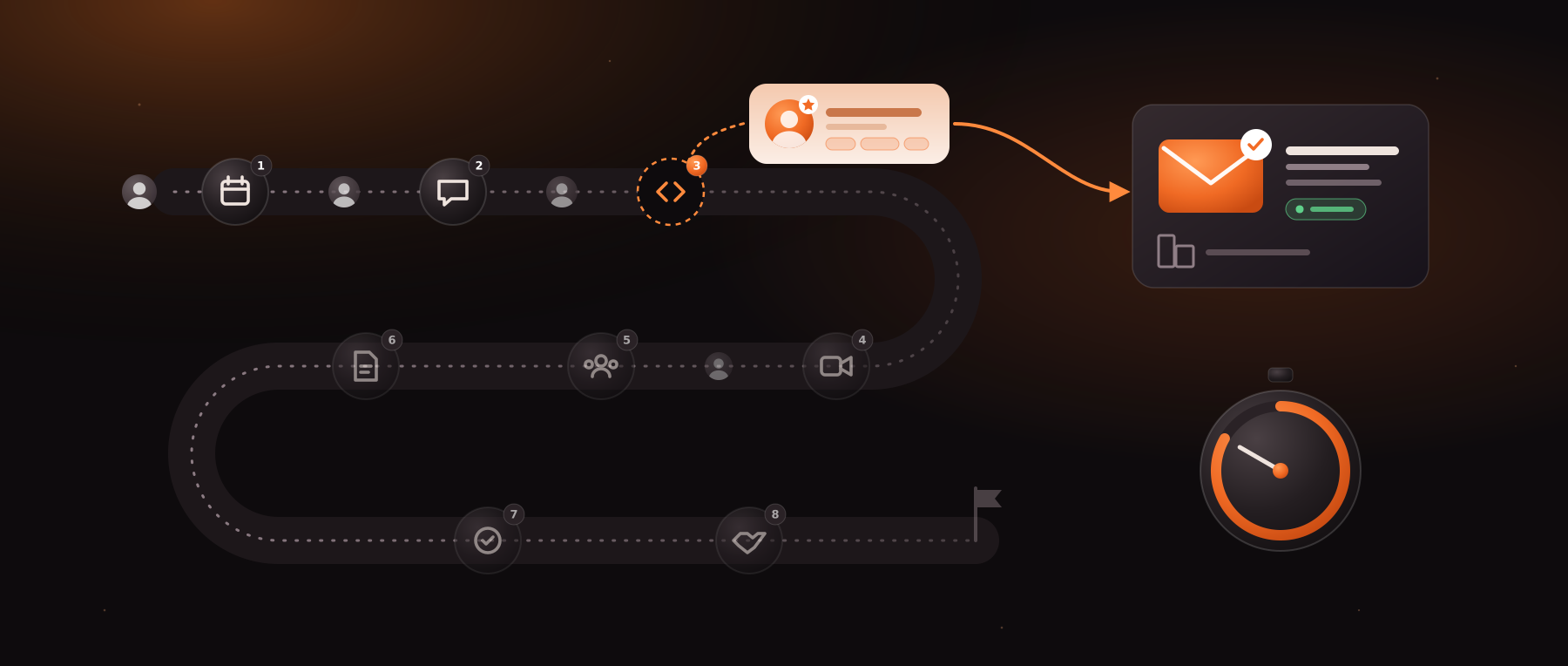
3. Hiring cycles move too slowly Interview rounds, assessments, alignment meetings, and offer processes often take longer than the business can afford. By the time a decision is made, strong candidates may already be gone.
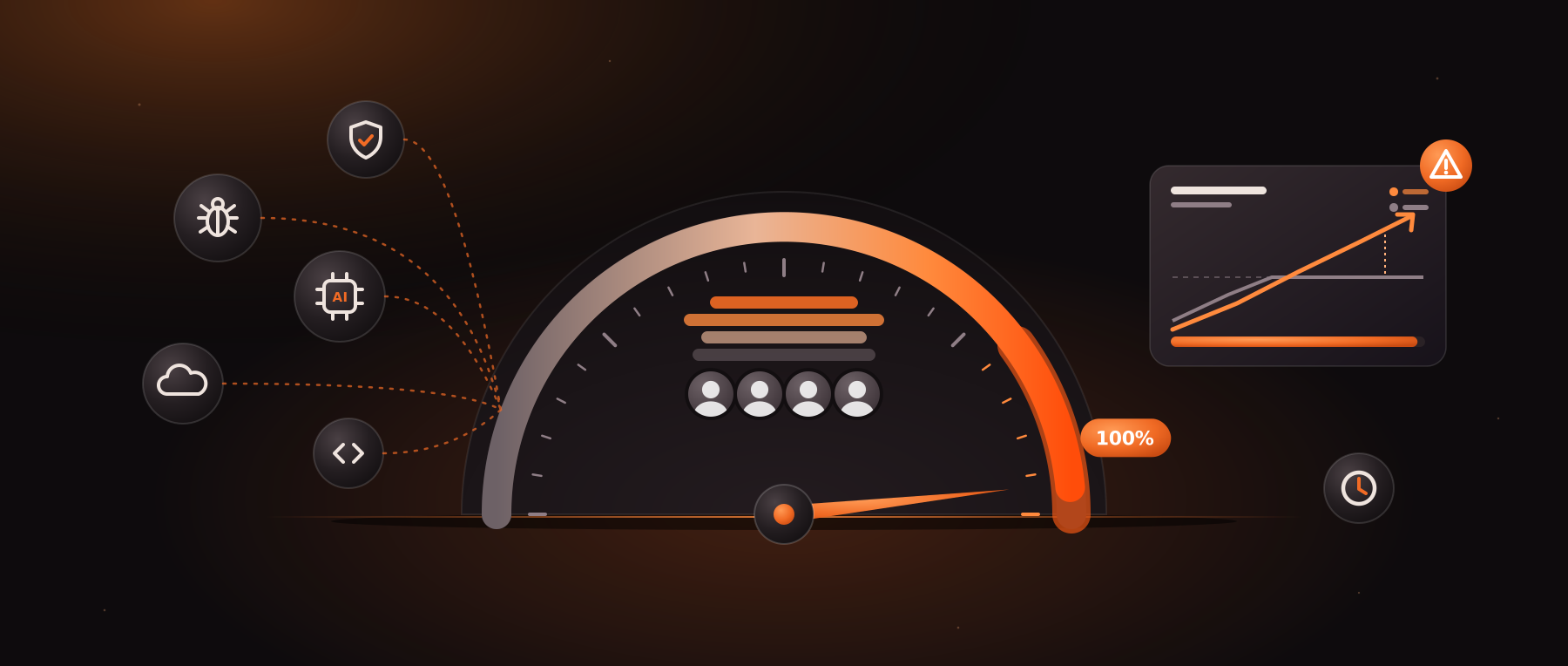
4. Specialist needs keep increasing In 2026, full-stack hiring often overlaps with needs in AI integration, cloud delivery, performance optimisation, DevOps, and data-heavy environments. That raises the bar even further.
5. Local hiring costs are rising For many scale-ups, local salary expectations and competition make hiring harder long before the business gets the capacity it needs.
How to Tell Whether the Hiring Problem Is Slowing Growth
Not every hiring challenge becomes a scaling problem. But when full-stack hiring starts affecting delivery, the signs show up quickly.
Common warning signs include:
product releases are moving more slowly than planned open roles stay open while roadmap pressure increases internal engineers are overloaded covering multiple gaps leaders are spending too much time interviewing instead of building product teams are delaying work because capacity is too thin the business is making roadmap decisions based on hiring limitations rather than market opportunity
These signs matter because they show when hiring has become more than a recruitment issue. It has become a growth constraint.
Why is full-stack talent hard to hire for SaaS scale-ups?
Full-stack talent is hard to hire for SaaS scale-ups because demand is high, the role is broad, hiring cycles are often too slow, and growing companies increasingly need engineers who can handle both product delivery and more complex technical requirements.
Why do scale-ups struggle more than larger companies to hire full stack developers?
Scale-ups often struggle more because they are competing for the same talent without always having the same hiring bandwidth, brand recognition, or salary flexibility as larger employers.
When does a hiring issue become a growth bottleneck?
A hiring issue becomes a growth bottleneck when open roles start delaying releases, overloading current engineers, or forcing the business to slow roadmap execution.
What makes full-stack hiring harder in 2026?
Full-stack hiring is harder in 2026 because companies increasingly want engineers who can span product delivery, architectural thinking, communication, and adjacent areas like AI integration, cloud systems, and performance optimisation.
Challenges of Hiring Without the Right Support
Even when a scale-up knows exactly what it needs, full-stack hiring can still move too slowly. We often see the same problems come up.
Long hiring cycles: strong candidates are lost before the process finishes Evaluation difficulty: it is hard to assess both technical breadth and product fit Leadership strain: senior engineers spend too much time interviewing and too little time delivering Capacity drag: open roles create pressure that existing teams must absorb This is where the right IT staff augmentation model can make a practical difference.
How IT Staff Augmentation Helps You Hire Faster
When a business needs more engineering capability without waiting through long hiring cycles, IT staff augmentation creates a faster path. Instead of relying only on local recruitment, the company extends its team with Dedicated Developers who match the technology stack, delivery model, and business goals already in place.
That matters because scale-ups do not only need more resumes. They need strong engineers who can contribute quickly, integrate well, and reduce delivery pressure. With the right approach, companies can:
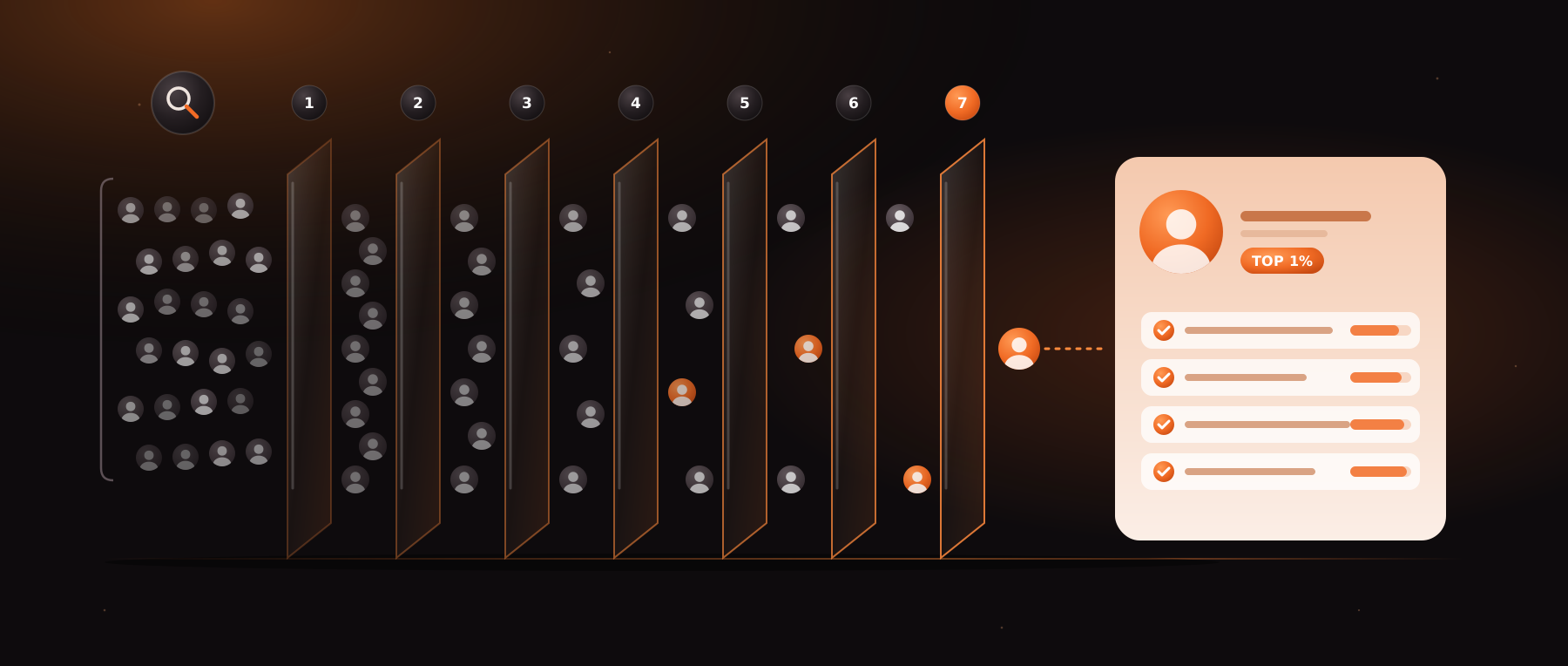
access Top 1% Developers through a structured vetting process work with AI Vetted Talent supported by Technical Assessments and human review Hire Within A Week for many roles, depending on specialization benefit from Transparent Pricing and No Hidden Costs use an All-Inclusive Pricing Model that reduces operational burden work with a Dedicated Customer Success Manager for Continuous Support scale through Fully Integrated Services rather than disconnected sourcing alone
Why IT Staff Augmentation Wins
When hiring speed matters, the best solution is not always to push the same internal process harder. Sometimes the right move is to add vetted engineering capacity through a model designed for speed, flexibility, and long-term integration.
That is why IT staff augmentation works so well for SaaS scale-ups. It gives growing companies access to strong developers without the delays, overhead, and unpredictability that often come with traditional hiring alone. Instead of slowing the roadmap down, the business can keep building momentum.
Conclusion
SaaS scale-ups do not struggle to hire full-stack talent because they lack ambition. They struggle because the market is competitive, the role is broad, and growth moves faster than traditional hiring cycles.
If you want to reduce hiring friction without slowing down product delivery, Smart Working can help you hire Dedicated Developers with Transparent Pricing, Time Zone Aligned Hiring, and Continuous Support. Reach out today to explore the right setup for your team.