When your software company is growing, your in-house full-stack team often becomes the engine behind everything. They are building new features, maintaining the product, fixing urgent issues, supporting integrations, and helping the business move faster. At first, that flexibility feels like a major advantage. But as the roadmap expands, customer expectations rise, and specialist work increases, the same structure that once helped you move quickly can start slowing you down.
That is the point many engineering leaders reach in 2026. The team is talented, committed, and working hard, yet delivery starts becoming less predictable. Releases take longer. Specialist tasks begin to stack up. Senior engineers become overloaded. The issue is not always quality. Very often, it is that the in-house full-stack model has reached its natural scaling limit. Let’s break down why that happens and what growing teams can do about it.
Why In-House Full-Stack Teams Hit Scaling Limits
In-house full-stack teams hit scaling limits when product complexity, specialist work, maintenance load, and delivery demand grow faster than the team’s available capacity. The same engineers end up covering too many priorities at once, which creates bottlenecks, slows releases, and makes scaling less predictable.
Why In-House Full-Stack Teams Matter
In-house full-stack teams are valuable because they bring flexibility. A strong team can move across frontend, backend, APIs, product fixes, and delivery support without constant handoffs. For early-stage and growth-stage businesses, that kind of coverage is a major advantage.
It helps teams:
move quickly with fewer dependencies solve problems across multiple parts of the product work closely with product and leadership teams maintain strong context on business priorities
That is exactly why many companies rely heavily on full-stack teams early on. But the more a business grows, the more likely it becomes that flexibility alone is no longer enough.
The Main Reasons In-House Full-Stack Teams Stop Scaling
When we speak to CTOs, founders, and engineering leaders, the same patterns tend to come up again and again.
1. Too much work depends on the same people As the company grows, the same engineers are often expected to handle feature delivery, bug fixing, architecture decisions, reviews, mentoring, and support work. That creates a capacity ceiling quickly.
2. Specialist work starts crowding out delivery AI integration, DevOps, security, performance optimisation, cloud architecture, and data engineering all demand deeper expertise. When those needs land on the same generalist-heavy team, roadmap work begins to slow.
3. Hiring cannot keep up with demand A growing roadmap often needs more engineering capacity faster than local hiring can deliver it. Roles stay open, deadlines keep moving, and the internal team absorbs the gap.
4. Coordination overhead keeps increasing As teams grow, leaders spend more time on planning, approvals, reviews, and cross team dependencies. That means every additional project creates more communication load.
5. Maintenance work quietly takes over As products mature, the share of time spent on support, technical debt, infrastructure upkeep, and issue resolution grows. Without added capacity, product delivery slows even when the team is fully occupied.
How to Tell When Your Team Has Hit a Limit
One of the hardest parts of scaling is recognising when the current structure is no longer working as well as it used to. Many companies do not notice the limit until delivery is already under pressure.
Common warning signs include:
release cycles are getting longer senior engineers are overloaded with approvals and reviews specialist work keeps slipping from sprint to sprint hiring plans are active, but capacity still feels tight product teams are waiting on the same people to unblock progress new initiatives are delayed because the current team is already stretched
These signs do not mean your team is underperforming. They usually mean the team is carrying too much scope for the structure it is operating in.
Why do in-house full-stack teams hit scaling limits?
In-house full-stack teams hit scaling limits when product complexity, specialist work, and delivery demand grow faster than the team’s available capacity. The same engineers end up covering too many priorities at once, which slows releases and increases bottlenecks.
What is the biggest problem with scaling only through an in-house team?
The biggest problem is that adding more roadmap pressure does not automatically add more specialist capacity, delivery bandwidth, or hiring speed. A strong team can still become overloaded when too much work depends on the same people.
When should a company look beyond its in-house full-stack team?
A company should look beyond its in-house full-stack team when releases are slowing, specialist work keeps slipping, senior engineers are overloaded, or hiring cannot keep up with roadmap demand.
Can full-stack developers handle scaling on their own?
Not always. Full-stack developers are flexible, but growing companies often reach a point where specialist needs in AI, DevOps, cloud architecture, data engineering, or security create more delivery pressure than a generalist-heavy team can absorb alone.
Challenges of Scaling Without the Right Support
Even when the bottlenecks are clear, many businesses still struggle to respond quickly enough. We have seen companies run into the same problems repeatedly.
Hiring delays: key roles remain open for too long Skill gaps: important work in AI, DevOps, security, or cloud delivery keeps stalling Leadership overload: senior engineers spend too much time unblocking work instead of moving strategy forward Process friction: more headcount creates more complexity if the real constraint is still unresolved
This is where the right IT staff augmentation model can make a practical difference.
How IT Staff Augmentation Helps Remove the Bottleneck
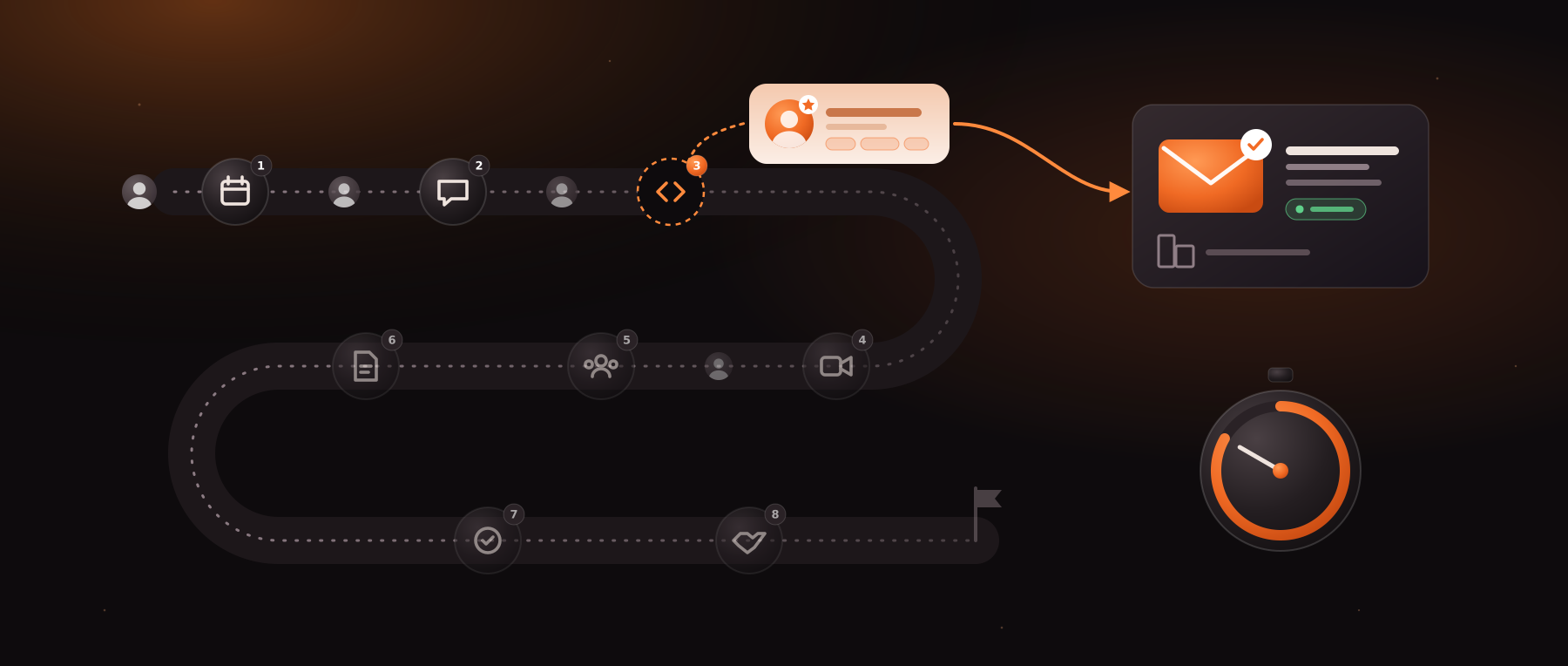
When a company reaches the limits of an in-house-only model, IT staff augmentation creates a way to add capacity without giving up control of delivery. Instead of replacing the internal team, the business extends it with Dedicated Developers who fit the roadmap, technology stack, and working style already in place.
That matters because the goal is not just to add people. It is to remove the specific bottleneck slowing the team down.
With the right approach, companies can:
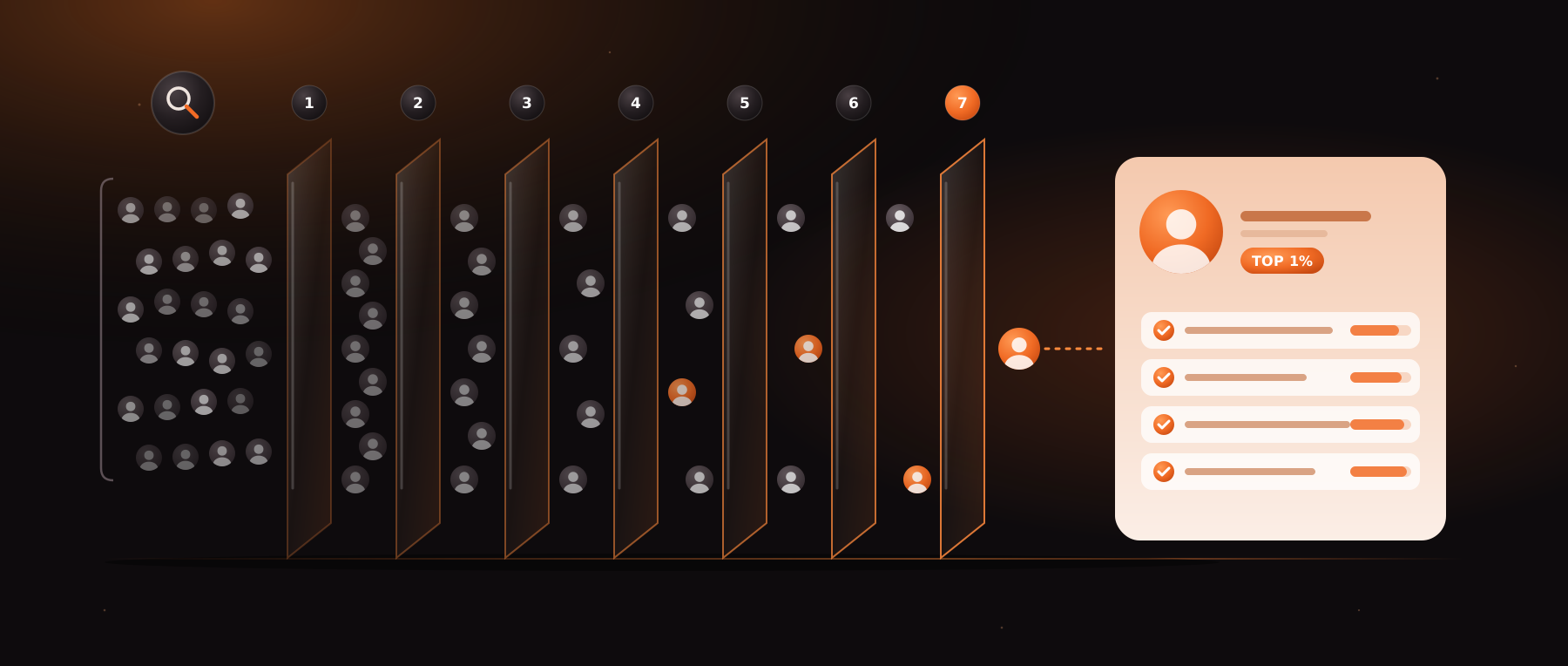
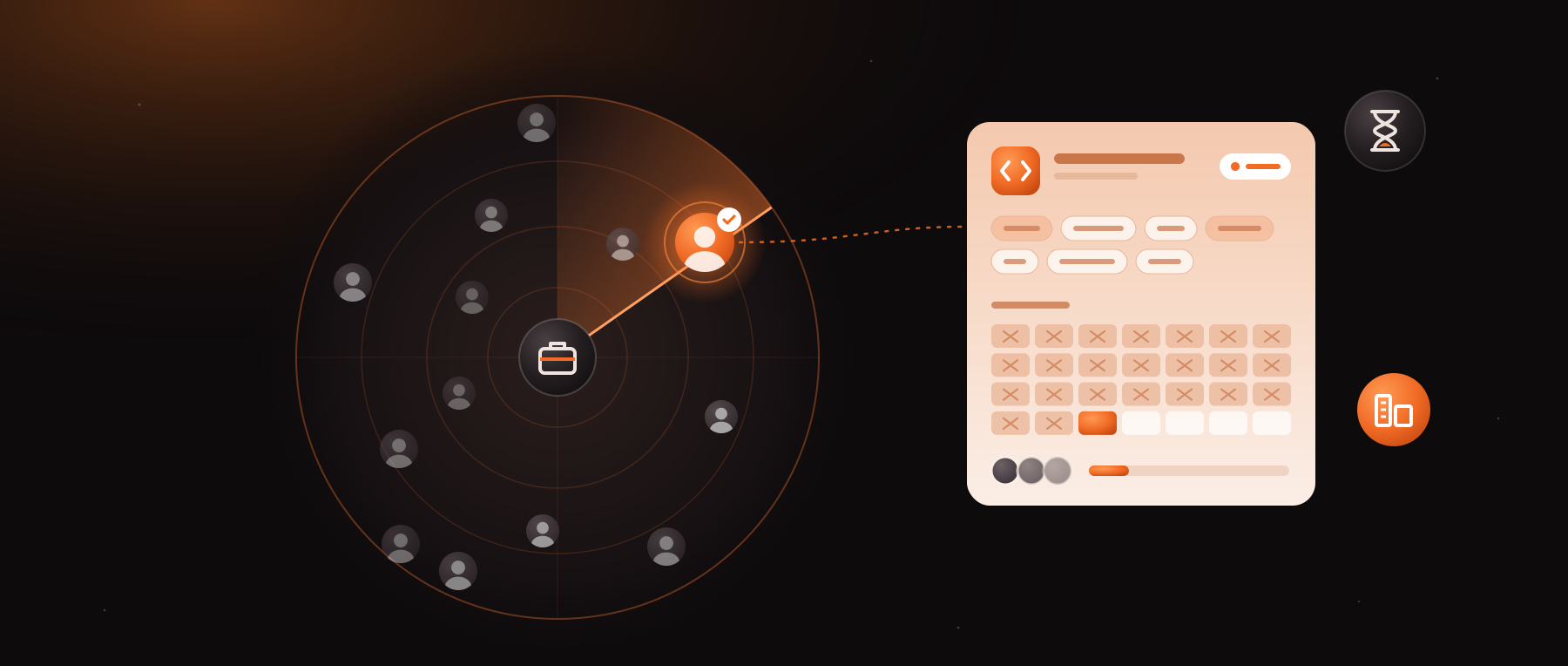
access Top 1% Developers through a structured vetting process work with AI Vetted Talent supported by Technical Assessments and human review Hire Within A Week for many roles, depending on specialization benefit from Transparent Pricing and No Hidden Costs use an All-Inclusive Pricing Model that reduces operational overhead work with a Dedicated Customer Success Manager for Continuous Support scale through Fully Integrated Services rather than disconnected sourcing alone
Why IT Staff Augmentation Wins
When a growing company needs to scale, speed alone is not enough. What matters is getting the right capability into the team without creating more disruption. That is why IT staff augmentation works so well when an in-house team is strong but overstretched.
Instead of pushing the same internal structure harder, businesses can add vetted remote engineers who contribute quickly, integrate into the existing workflow, and reduce the pressure on core delivery teams. The result is a model that supports growth without sacrificing quality, flexibility, or control.
Conclusion
In-house full-stack teams are often one of the strongest assets a growing software company has. But even the best teams hit limits when the roadmap expands faster than capacity, specialist work increases, and hiring speed cannot keep up.
That does not mean the in-house model is broken. It means the business has reached a new stage of scale.
If you want to keep moving without slowing down delivery, Smart Working can help you hire Dedicated Developers with Transparent Pricing, Time Zone Aligned Hiring, and Continuous Support. Reach out today to explore the right setup for your team.